Happy Cinco de Mayo, or as it’s known in Mexico, May 5. This is a day when we Americans celebrate the day that Mexican troops defeated French troops which were on their way to Mexico City. By doing so, they helped the United States win against the Confederacy in the American Civil War. Just one example in a long history of Mexicans and the descendants of Mexicans contributing to make the USA a better place.
Psychologist Valerie Tarico has written a very interesting article, “Political Narrative II: Why Some Progressives Are Tearing Each Other Apart“. I have said, many times (and sadly, I think I will have many opportunities to say it again), clinging to past grievances — no matter how valid they are — is not the way to make a better future. At some point, you must put the past behind you, if you want to move beyond it. We need to focus on making tomorrow better than today. Not perfect: perfection is not an option, and we will never make any progress if we insist on that. Just make tomorrow better than today.
As an aside, this also provides me with an insight into some of my more conservative friends. I see them making comments (often defensive comments, as though they’ve been attacked) about “liberals”, but those comments seem to come out of nowhere. It’s because those defensive comments aren’t aimed at me, or people like me — they are aimed at what this article calls the Structural Oppression group.
I look forward to the day when one’s skin colour, facial features, and sex are as easily changed as hair length and hair colour are now — and are finally treated as the superficial traits they are.
Comments Off on Two different perspectives on what “progress” means
Watching a documentary about sugar, called “Sugar Coated” (2015). Briefly, obesity has doubled in the past 30 years, and diabetes has tripled, and it’s because sugar is in literally everything and we eat way too much of it. We eat twice as much processed food, and at least twice as much sugar, as we did 30 years ago. And make no mistake: our sugar consumption 30 years ago was enormous, compared to 30 years before that. It was already far too much sugar.
The people who made the video keep saying that this is a controversial issue.
How is this controversial? It’s obvious. Look at the ingredients in spaghetti sauce, hot dogs, barbecue sauce, ketchup, cereal, pizza sauce, even bread. Bread! Have you seen the cereal aisle at the grocery store? It’s literally boxes of candy. Grocery stores have become candy stores — and that’s not even touching on actual candy and cakes, of which we consume vast quantities.
I have always been interested in criminology and criminal justice. I actually minored in Criminology when I got my degree (I’ve considered going back to get a B.S. in Criminology, but I’ll never work in that field, so it would just be an expensive piece of paper).
For many years, it has been a source of great distress to me that our criminal “justice” system is staffed by prosecutors who care only about convictions (guilt or innocence is irrelevant), police who are unabashedly and overtly corrupt, and politicians whose only concerns are being “tough on crime” and friendly to private-prison lobbyists. Our society is paying the price for this systemic corruption of what ought to be a bulwark to protect us.
I’d never heard of Larry Krasner before today, but the facts that he exists, and that the people of Philadelphia elected him, gives me some hope that our future may not be as dark as it currently seems.
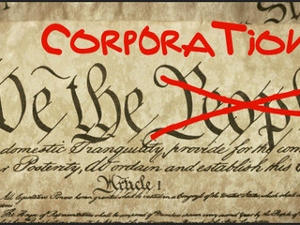
At the risk of pouring gasoline on a bonfire, I think we have erred by making the Constitution part of our national religion. People shout out the numbers of Amendments like they are magic spells to ward off evil.
The Constitution is not holy text carved into tablets by a god. The rules our government operates under were written by people who thought they were a good idea at the time, just like all of our other laws. And just like all of our other laws, what people actually intended is subject to debate, how they will be implemented is subject to the discretion of later generations, and they can and should be changed when later generations decide that’s a good idea at the time.
It wasn’t that long ago that oral sex was illegal in Virginia. Just because someone wrote it down and people voted on it, doesn’t necessarily make it wise or right or even reasonable.
They’re just rules. Rules can be changed.
Comments Off on So about those first and second Amendments to the U.S. Constitution…
I ran across this quote today (not for the first time). It occurs to me that our fairy tales might have changed, but the lesson is still the same.
“Fairy tales, then, are not responsible for producing in children fear, or any of the shapes of fear; fairy tales do not give the child the idea of the evil or the ugly; that is in the child already, because it is in the world already. Fairy tales do not give the child his first idea of bogey. What fairy tales give the child is his first clear idea of the possible defeat of bogey. The baby has known the dragon intimately ever since he had an imagination. What the fairy tale provides for him is a St. George to kill the dragon. Exactly what the fairy tale does is this: it accustoms him for a series of clear pictures to the idea that these limitless terrors had a limit, that these shapeless enemies have enemies in the knights of God, that there is something in the universe more mystical than darkness, and stronger than strong fear.”
— G.K. Chesterton, Tremendous Trifles (1909), XVII: “The Red Angel”
P.S. This is often mis-quoted as something like, “Fairy tales do not tell children that dragons exist. Children already know that dragons exist. Fairy tales tell children that dragons can be killed.” It’s succinct, and it’s true, but that’s not the quotation. I care about things like that. You might not.
From time to time, there is a meme about “name something today’s generation would not recognize”, or something to that effect. How about this? This is what I used to carry in my laptop bag circa 1990 to get on the Internet when I traveled. This was before the World Wide Web was invented (although AOL, Compuserve, and Genie existed — I had accounts on all three). You had to connect to a phone line and make a telephone call to an Internet provider. This was called “dial-up”.
Observation: the core disagreement that people have over “illegal immigration” is based on whether they think people should serve the law, or the law should serve people.
Comments Off on Illegal immigration: an observation
I think a large part of what’s wrong with the world is that humans live too long. In 14th century England, most people were married by 16, dead by 50, and every so often you’d have a plague that killed a huge chunk of the population. Yet even then, they’d already hunted boars and wolves to extinction by the mid-1300s.