[x]Blackmoor Vituperative

Tuesday, 2005-09-06

OpenOffice adopts GNU LGPL

Filed under: Intellectual Property,Linux — bblackmoor @ 13:16

All OpenOffice.org source code and binaries (executable files) up to and including OpenOffice.org 2 Beta 2 are licensed under both the LGPL and SISSL. Effective 2 September 2005, all code in the 2.0 codeline will be licensed exclusively under the LGPL. All future versions of OpenOffice.org, beyond OpenOffice.org 2 Beta 2, will thus be released under the LGPL only. The change in licensing implicitly affects all languages and platforms in which OpenOffice.org is distributed.

(from OpenOffice.org, License Simplification FAQ)

This goes along with the OSI initiative to trim the ridiculous number of OSI-approved open source licenses down from 50 or so to around 3, which I wrote about back in February. At this rate, it’ll be the year 2026 before they reach their goal. Still, kudos to Sun for taking that scary step of altering their license.

Saturday, 2005-09-03

Another day, another update

Filed under: Linux,Science — bblackmoor @ 13:06

I updated the site statistics. More hackers whose IPs have been logged and blocked, and more weird search terms which led people here. It seems that the Fantanas are more popular than Windows. Who’d have guessed?

Friday, 2005-09-02

Massachusetts to adopt ‘open’ desktop

Filed under: Intellectual Property,Technology — bblackmoor @ 09:59

In a spectacular demonstration of amazingly good sense, the commonwealth of Massachusetts has proposed a plan to phase out office productivity applications from Microsoft and other providers in favor of those based on “open” standards, including the recently approved OpenDocument standard.

The state’s move is a boost to the relatively new standard, whose full name is the OASIS Open Document Format for Office Applications. It’s also a blow to Microsoft, which dominates the office application market and has found government customers to be among those most aggressively considering open-source alternatives.

The OpenDocument format, which was ratified as a standard in May, covers office applications, including word processors, spreadsheets and charts.

It is the default format for the OpenOffice open-source suite of applications and is supported in suites by Novell and Sun Microsystems and by IBM in its Workplace products.

(from ZDNet, Massachusetts to adopt ‘open’ desktop)

Microsoft responded with the usual FUD, of course:

Alan Yates, Microsoft’s general manager of Information Worker business strategy, criticized the Massachusetts proposal, saying it was “confusing”. …

Yates reiterated the Microsoft does not intend to natively support the OpenDocument format, which he said was very specific to the OpenOffice 2.0 open-source suite.

He said Microsoft can provide the same data interoperability and archiving that Massachusetts is pursuing because Microsoft publishes the XML schema of its Office applications and makes available through a royalty free license.

(from ZDNet, Massachusetts to adopt ‘open’ desktop)

This is terrific news, I heartily commend the Commonwealth of Massachusetts, and I hope that Virginia follows their lead. It kind of reminds me of that poster with the little white mouse and the hawk, though. You know the one: the hawk is swooping down, and the mouse is about to be caught and eaten, but the mouse is giving the hawk the finger. At the top of the poster is the word “DEFIANCE”.

Friday, 2005-08-26

Competing with the Microsoft hegemony

Filed under: Linux — bblackmoor @ 09:52

John Carroll over at ZDNet has an article about what it would take for Linux and open source software can compete with the Microsoft “ecosystem”. His first two points are pretty reasonable. In fact, I think they’re common wisdom by now:

1. More consistency: Ecosystems are essentially standards that extend across software markets. They simplify development by lowering costs, shortening development timeframes and leveraging knowledge across markets.

For Linux to build a proper ecosystem, more thought needs to be applied to what technology will be present on every instance of Linux. That’s going to be hard, as one of the things that appeals to so many users of Linux is its technology agnosticism. … For instance, choose whether every system must include KDE or Gnome (but not both). Decide that every instance of Linux must ship with Corba, and which Corba ORB it should use. Every version of Linux should ship with Java or .NET….

2. Greater spread: I noted in my original post that ecosystems are only as valuable as their spread. That means that Linux cannot confine itself to markets where it is currently popular. Linux needs to spread, and that means they need to get more popular in desktops, handhelds, cell phones, music players, media technology, etc.

No stunning news there.

From here, however, Carroll veers into the Twilight Zone:

3. Detente with the world of proprietary software: Now for the controversial stuff. The single biggest force holding back the growth of open source software are the Free Software vigilantes who view proprietary software as tantamount to slavery. That puts open source in the productive category of nations that prevent the female half of the population from working. Open source programmers do great things, but proprietary software can benefit from both the efforts of open source programmers AND the efforts of those who create for financial gain.

That’s a waste. Philosophically, open source should move closer to Eric Raymond (who understands that there is a role for proprietary software) and away from Richard Stallman (who is on record as saying programmer’s should make less money).

Yes, Stallman is a flake. You’ll get no argument from me there. And no, he obviously shouldn’t be setting policy for the open source movement. He had a great idea, and he’s due credit for that, but just because the gods reach down and touch a band and they have one of the best songs ever (e.g., How Soon Is Now by The Smiths) doesn’t mean that you should listen to that band for the rest of your life.

But Carroll is missing the central element of what makes open source software “open source” — the license requires it. You can’t combine GPL and patented software into one product. The GPL is sometimes compared to a virus. It’s not: patents are the virus, and the GPL is the cure. Compromising with the world of proprietary, patented software would destroy the world of open source software.

4. Encourage a paying market atop your products: … Of course, there is nothing which officially stops companies from selling Linux software. There is a barrier, however, that derives from a culture that expects low-cost, if not free, open source products.

This is partly derived from the difficulties of deriving revenue from software as such when the secret sauce is published for all the world to see. Lots of people gloss over that problem by noting that there are lots of other ways to make money from software besides sales. Even so, it’s worth noting that the web of companies that build software for Windows (and who form a large part of the appeal of Microsoft’s platforms) are attracted by the profits to be generated by a pool of buyers with a demonstrated willingness to pay.

A similar buying culture needs to be built for the open source world. That will require, of course, jettisoning the “free software” philosophy which drove the movement in its early days.

So in order for open source software to compete with the Microsoft hegemony, it needs to stop being open source. Thank you for that pearl of wisdom, Mr. Quisling.

Here is a man who physically embodies the concept of “not getting it”.

Tuesday, 2005-08-23

Zotob and the real cost of Windows vs. Linux

Filed under: Linux,Technology — bblackmoor @ 18:22

Danger: Do Not Operate

The Zotob attacks could have been prevented by proper Windows patching, or they could have easily been prevented for less by using Linux in the first place.

(from eWeek, Zotob Madness and the Real Cost of Windows vs. Linux)

I don’t run Windows on any server, and haven’t for several years (nor has any competent system administrator, in my opinion). In fact, there’s only one reason I even use Windows on the desktop, anymore: Adobe Photoshop. But with Adobe’s pernicious “treat your customers like criminals” features in recent versions of Photoshop, that may not continue much longer.

OpenOffice 2.0 delays

Filed under: Technology — bblackmoor @ 18:03

I’m not the only one wondering what’s taking so long to release OpenOffice 2.0.

Monday, 2005-08-22

Disable Internet Explorer

Filed under: Technology — bblackmoor @ 09:17

Microsoft’s Internet Explorer has become a sort of intelligence test: if you are still using it, you fail the test.

Internet Explorer’s laundry list of vulnerabilities and Firefox‘s growing popularity have made many users consider their browser alternatives. If you’ve had enough of dealing with IE’s security flaws and decide to make a switch, this article from Tech Republic demonstrates two ways you can disable IE for your users.

Sunday, 2005-08-14

Palm Tungsten T5

Filed under: Technology — bblackmoor @ 12:08

Palm Tungsten T5Amazon.com has the Palm Tungsten T5 Handheld for $332 with free shipping. Free Executive Case with code PALMFREECASE [Exp 8/29].

This is a great PDA. I’ve owned numerous PDAs, from Handspring, Palm, and even Tapwave, and this is the best I’ve ever owned. It has everything a PDA should have:

  • PalmOS (5.4)
  • slim form factor
  • big, bright 320×480 color screen
  • plenty of memory (256MB)
  • Bluetooth
  • SD / SDIO / MMC expansion slot

It’s simply awesome.

Hackers should be tortured

Filed under: Linux,Society — bblackmoor @ 10:24

The list of scumbag hackers who try to break into my server just keeps growing. It’s really just too unfortunate that their failure can’t carry some sort of immediate, painful, and potentially lethal penalty. Anyway, I updated the site statistics.

Tuesday, 2005-08-02

Novell goes for SCO’s throat

Filed under: Intellectual Property,Linux — bblackmoor @ 16:47

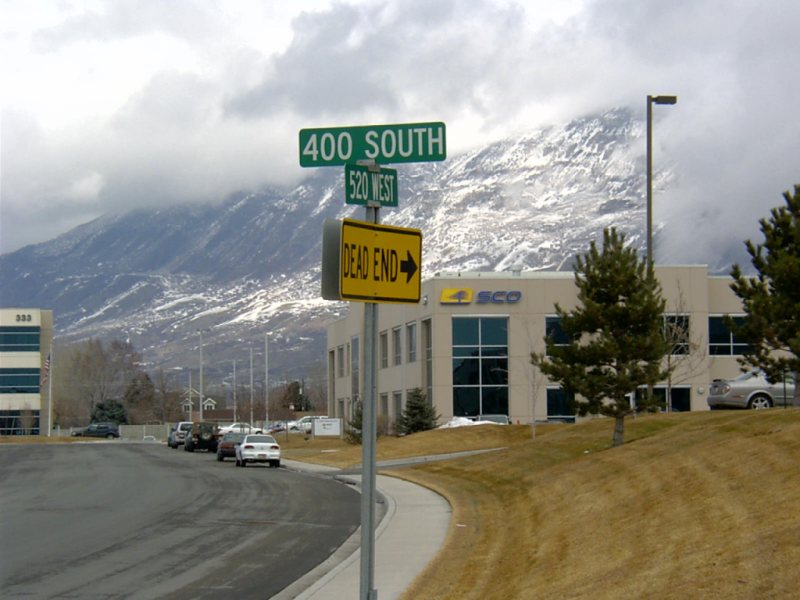
In camera veritasAfter what seems like an eternity, someone is finally putting the smack-down on SCO.

On Friday, Novell Inc. filed its Answer in the U.S. District Court in Utah to The SCO Group Inc.‘s claims that it, and not Novell, owned Unix’s copyrights. Novell also filed counterclaims asking the court to force SCO to turn over its Unix licenses royalties to it and to attach SCO’s assets to ensure that it can pay Novell.

(from eWeek, “Novell Goes for SCO’s Throat”)

If you haven’t been paying attention to the SCO vs. Linux soap opera, there’s a pretty good summary called There’s No Business Like SCO Business on the site IT-Analysis.com. That article also has some interesting tidbits pertaining to the automobile accident in which Princess Diana of Wales and Dodi Fayed were killed.

The usual suspects on this one are, the British Royal Family (of course), MI6 (naturally), arms manufacturers (remember all those anti landmine activities of Princess Di?) and the CIA, which foolishly revealed that it must have been involved by denying that it had anything to do with it (it really did – can you believe that?). Of course there are unusual suspects too – these include the Cult of Diana (a hang over from Roman times given new life by Diana’s death), the Jews (maybe they qualify as usual suspects, but on this one, I personally think it’s a little North-By-South-East) and black magicians, who as we all know, are wont to arrange ritualistic car crashes in Parisian underpasses.

(from IT-Analysis.com, There’s No Business Like SCO Business)

« Previous PageNext Page »