![[x]](/images/sigil_md.jpg) Blackmoor Vituperative
Blackmoor VituperativeStranger Danger
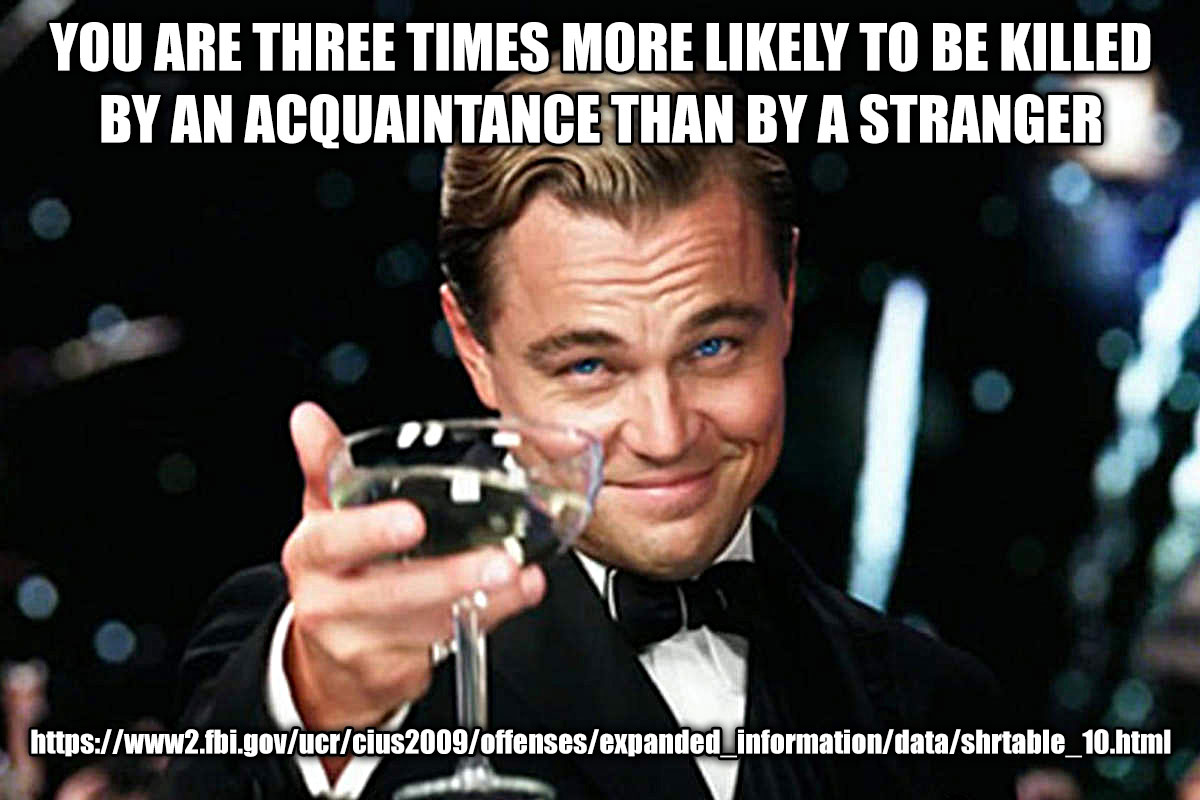
You are three times more likely to be killed by an acquaintance than by a stranger.
(https://www2.fbi.gov/ucr/cius2009/offenses/expanded_information/data/shrtable_10.html)
Comments Off on Stranger Danger
You are three times more likely to be killed by an acquaintance than by a stranger.
(https://www2.fbi.gov/ucr/cius2009/offenses/expanded_information/data/shrtable_10.html)
I find it disappointing to learn how many otherwise reasonable people are willing to say unkind things about people they do not know: i.e., southerners, gun owners, Muslims…
Prejudice and irrational fear make a poor basis for public policy.

Fun fact! The US Post Office is one of the very, very few parts of our federal government that is authorized by our Constitution:
“The Congress shall have Power […] To establish Post Offices and post Roads;”
— US Constitution, Article I, Section 8, Clause 7
(That same clause authorizes what we today call the US Interstate Highway System.)
As for the USPS losing money, it does and it doesn’t. It routinely makes more than it spends on actual operating costs. The “losing billions” that people sometimes refer to pertains to payments made into a fund for employees’ future retirement for the next 75 years. These payments are the result of a 2006 law passed by Congress, and it’s a requirement that is imposed on no other public or private institution.
But when you see people talk about the Post Office “losing billions”, that’s what they are talking about: failure to pay into a fund for the future health and retirement benefits for people who are not yet born.
If I were conspiratorially minded, I would think that this unique requirement was imposed on the USPS specifically to drive it out of business, by the same people who today call for its privatization because it “loses billions”. But that’s just crazy, right?
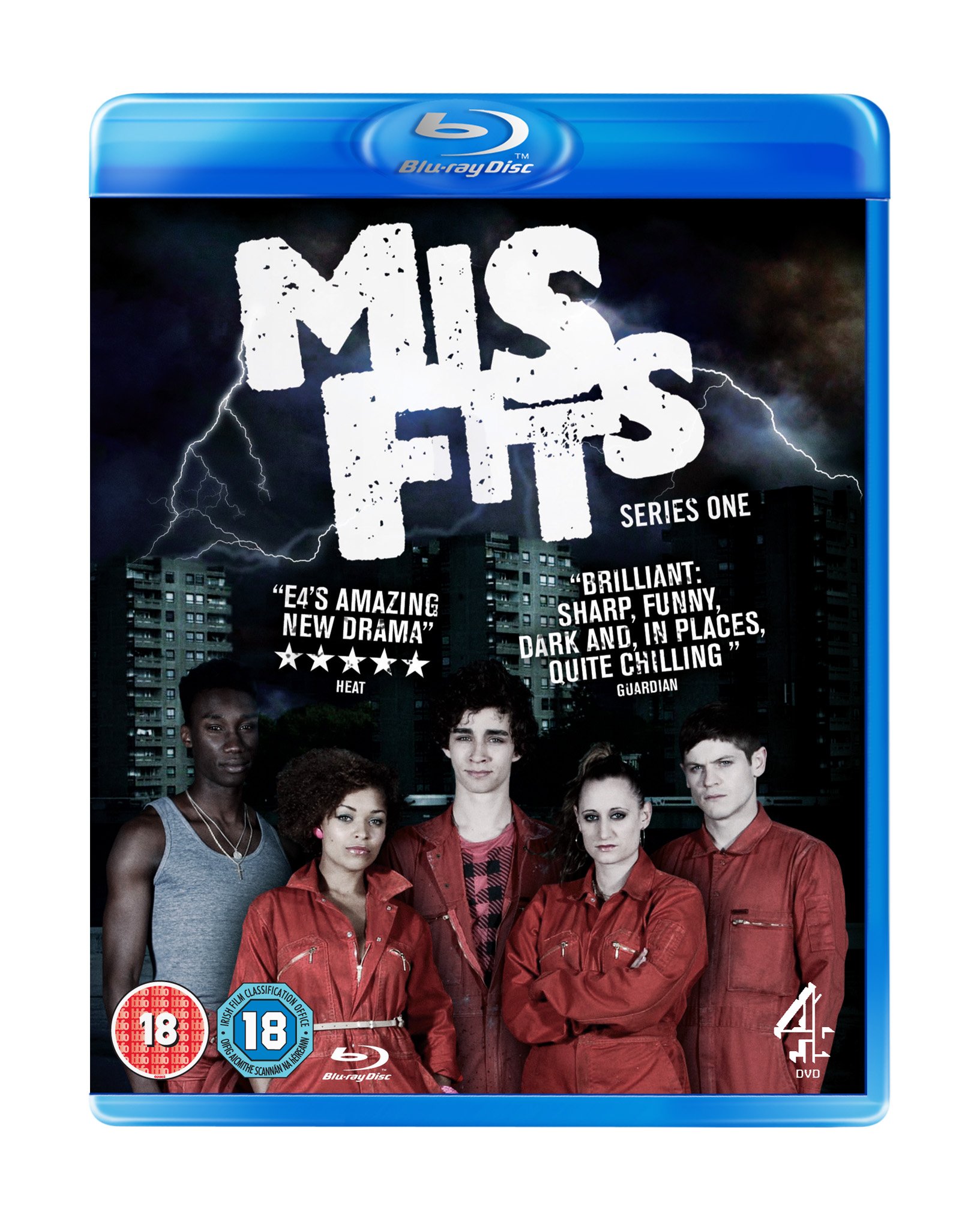
I’ve reached the end of Misfits (eight seasons on Netflix, but there’s only eight episodes per season). While it’s a bit uneven, and sometimes it takes some effort to care about the characters, I like it so much more than the current seasons of Gotham, Agents of Shield, and Heroes Reborn.
The thing that irks me most about Heroes Reborn, and why I won’t be watching it anymore, is the tiresome “there’s no time!”/”it’s too dangerous!” enforced secrecy, without which the whole plot would collapse like a punctured bouncy house. If the main characters just had a five minute conversation, they could save us all the trouble of sitting through a dozen episodes of nothing. But no: there’s no time/it’s too dangerous! “No time” is right: life is too short to watch an exercise in padding.
Agents of Shield is just boring. I don’t care about the characters, don’t care about their mission, the plots are dull, the villains are dull, the outfits are dull, yawn, goodbye.
And Gotham… I liked the first season of Gotham, but FFS, I get it: the red-headed kid is the Joker. Except he’s not, because the Joker won’t show up for another 10-15 years (after Batman does), and when he does, whoever he used to be is a huge mystery, so he can’t be some famous over-the-top psycho from when Bruce Wayne was a kid. Seriously, he’s way over-the-top. Jim Carrey in The Mask is looking at this guy and going, “Whoa, dude: dial it back a notch.”
I hope Powers comes back for another season. The first season was slow, the production values are… frugal, and Eddie Izzard’s character will probably not return (he was the shining beacon of the first season), but I would still like to see where it goes from where the first season left off.
There should be a name for the phenomenon of, “I’m right to believe this even if the reasons I state for believing it are false”. I see it all the time. Guns. GMOs. Black pets around Halloween. Being offended at someone’s costume. No matter how portentous or trivial the topic, facts just don’t seem relevant. It’s not a “liberal” vs “conservative” thing, either: it’s universal.
But it’s easier to block people who spew nonsense than argue with them. It’s not like an argument on the Internet ever changed anyone’s mind, anyway.
Me: You know, I watched “Manos: The Hands Of Fate” the other night, and I don’t think it’s as bad as everyone says.
Susan: … Really.
Me: Yeah, really! I mean, yeah, the pacing is pretty bad —
Susan: And the acting, and the sound, and the cinematography…
Me: And the directing, yes. But other than that —
Susan: The writing?
Me: Okay, not the writing itself, no, that’s terrible. But the basic premise —
Susan: The plot?
Me: Yes, the plot. The essential concept of the film. That’s actually pretty cool. This family goes on vacation, takes a wrong turn in the desert, and they wind up somewhere that normally isn’t there. It’s off sideways, and most people can’t find even if they are looking for it.
Susan: I don’t remember that.
Me: Yes! Everyone says that road doesn’t go anywhere. So where did this family end up? It’s like some otherwhere. And there’s a creepy caretaker, and a Master who’s always with us but “not dead as you know it”, and then the Master returns, and the family runs away into the desert but they come back… it’s actually a pretty cool idea.
Susan: Huh. So maybe they should remake that.
Me: Yes, they should! Only bad movies should have remakes, and only until a good movie is the result. They should never remake a good movie, because there is no need to — there is already a good movie with that concept. That’s how we got “The Maltese Falcon”.
Susan: So what do you think about the new Ghostbusters?
Me: sigh
Years ago, while watching The Wraith, I wondered out loud why “cool” villains like Dracula (or Nick Cassavetes in The Wraith) were always surrounded by incompetent creeps and toadies like Renfield (or “Skank” in The Wraith) — people I wouldn’t trust to guard an egg salad sandwich. Her reply was, in essence, because those are the kinds of followers they deserve — that they are not, in fact, “cool” at all.
I am reminded of that conversation whenever I read comments by Larry Correia and Brad Torgersen where they make weak attempts to distance themselves from Theodore Beale without distancing themselves from what Beale says or does. When you find yourself on the same side as the Theodore Beales of the world, it’s time to reevaluate your position.
These are notes for my own purposes, but they might be useful to others, as well. Note that it might be helpful for you to download the Windows 10 installation media yourself, rather than waiting for Microsoft to send it to you
Now that you have done all of that, there are a few essential applications you should consider installing:
Ran across this (“Cinematic Lightsaber Dueling“) today, which reminded me of an ongoing game-design problem that I have never solved to my own satisfaction. In the source media from which I draw inspiration for my own games, it is often the case that a combat ends when one opponent successfully hits the other: a single hit ends the fight. This isn’t the case for every fight, even within a single genre — fistfights, in particular, tend to lend themselves more to the traditional “whittling down the hit points” game mechanic. But in duels with lethal weapons — whether using lightsabers, phasers, or rapiers — a single successful hit tends to end the combat.
The biggest problem is not in coming up with a game mechanic to replicate this. The “Extended Tasks” rules in Bulletproof Blues, for example, could easily be used to model this sort of combat. The hurdle for me is combining this type of conflict with the more traditional “whittling down the hit points” combat in the same fight. They don’t really work together.
At the moment, I am thinking that a possible solution might be to use the same “Extended Tasks” style of resolution for conflicts that seem, on the surface, to be more traditional fights, and treating the “whittling down the hitpoints” as a “special effect” rather than a fixed number representing a concrete (rather than abstract) effect.
It occurs to me that way back in the day (the early to mid 1980s), this is how some people interpreted combat in AD&D (first edition, although of course we did not call it that back then). It was not a widely held interpretation, and was observed more in theory than in practice even among its proponents.
Powered by WordPress

